A backlink is a hyperlink from one website to another, and search engines use backlinks as a trust signal because they indicate that other sites consider yours a quality website.
What Are Backlinks?
A backlink is a hyperlink from one website to another, and search engines use backlinks as a trust signal because they indicate that other sites consider your content valuable enough to reference.
The more high-quality, relevant backlinks a page earns, the more authority it builds in search engine rankings.
Think of a backlink as a vote of confidence. If a respected industry blog links to your guide, search engines interpret that link as evidence that your content deserves attention.
Not all backlinks carry the same weight.
A link from a well-established, relevant website passes more authority than dozens of links from low-quality or unrelated sites. Relevance, authority, and editorial placement all influence a backlink’s value.
Let’s say you publish a detailed tutorial and a popular marketing blog cites it as a source.
That single backlink sends referral traffic, strengthens your site’s credibility, and helps search engines understand that your content is worth ranking.
Why Backlinks Matter for SEO?
Backlinks matter for SEO because they act as independent votes of credibility from other websites, helping search engines determine whether your content deserves to rank higher in search results.
When trusted, relevant websites link to your pages, they signal that your content provides value beyond your own claims.
Search engines evaluate backlinks as part of their ranking algorithms because they are difficult to earn at scale. Anyone can publish content on their own website.
But earning a link from another site requires someone else to find your content useful enough to reference.
Quality matters far more than quantity.
A single backlink from a respected, relevant website carries more ranking value than dozens of links from low-quality directories or unrelated sites.
Search engines also evaluate the linking site’s authority, topical relevance, and the context surrounding the link which also known as “Co-Occurence and Co-Citation“.
Let’s say you publish an in-depth guide about email marketing.
If several well-known marketing blogs link to that guide, search engines interpret those links as evidence that your page is a trusted resource.
As a result, your page becomes more competitive for relevant search queries.
Backlinks also help search engines discover new pages faster.
When a crawler follows links from established websites to your content, it can find and index your pages more efficiently.
Types of Backlinks
Backlinks fall into two main categories: their follow status and how they were acquired.
Follow status determines whether a link can pass ranking signals, while acquisition explains whether the link was earned naturally or created through a specific tactic.
The first axis is follow vs. nofollow. Follow links pass authority to the destination page, while nofollow links tell search engines not to treat the link as an endorsement for ranking purposes, rather the nofollow attribute for Search Engines is a hint.
The second axis is earned vs. built.
Earned backlinks come from other websites choosing to cite your content.
Built backlinks result from outreach, guest posting, digital PR, business listings, or other deliberate link-building activities.
Dofollow Vs Nofollow Backlinks
Dofollow backlinks pass ranking signals to the linked page, while nofollow backlinks use attributes that tell search engines not to treat the link as an endorsement for ranking purposes. Sponsored and UGC attributes serve the same purpose by identifying paid and user-generated links.
A dofollow link is the default unless a different attribute is added. These links help search engines evaluate authority and trust between websites.
A nofollow link includes rel="nofollow". A sponsored link uses rel="sponsored" for advertisements or paid placements. A UGC link uses rel="ugc" for forum posts, comments, and other user-generated content.
Let’s say a respected blog naturally links to your guide. That’s typically a dofollow backlink. If the same blog publishes a paid review, the link should use the sponsored attribute instead. Both links can send referral traffic, but only dofollow links are intended to pass ranking value.
Editorial vs. Manual vs. Self-Created Backlinks
Backlinks are also classified by how they are acquired: editorial, manual, or self-created.
Editorial backlinks are earned naturally when another website chooses to reference your content. Manual backlinks come from active outreach and relationship building.
Self-created backlinks are links you place on third-party websites yourself.
Editorial backlinks are the most valuable because they reflect genuine trust.
For example, a journalist, blogger, or industry publication cites your research or guide without you asking for a link.
Manual backlinks require effort to earn.
Common methods include guest posting, digital PR, broken link building, and personalized outreach that convinces another website to link to your content.
Self-created backlinks include links added to forum profiles, blog comments, business directories, social profiles, or community websites.
These links provide limited SEO value and should never be your primary link-building strategy.
Focus on earning editorial links while using manual tactics to create legitimate opportunities for high-quality backlinks.
What Makes a Backlink “High Quality”?
A high-quality backlink comes from a relevant, authoritative website and appears naturally within valuable content.
Search engines evaluate backlink quality based on relevance, the linking site’s authority, and where the link is placed, not simply on the total number of links pointing to your page.
A backlink from a trusted website in your industry carries far more weight than dozens of links from unrelated or low-quality sites.
Context also matters.
Links placed naturally within the main body of an article provide stronger signals than links hidden in footers, sidebars, or spammy directories.
Let’s say a respected marketing blog cites your SEO guide in a tutorial.
That single, relevant editorial link delivers more SEO value than hundreds of low-quality backlinks created only to increase link counts.
Topical Relevance & Domain Authority
Topical relevance carries more weight than domain authority alone when evaluating backlink quality.
A backlink from a trusted website in your niche sends a stronger ranking signal than a high-authority link from a website covering unrelated topics because search engines evaluate both authority and context.
Let’s say you run a fitness website.
A backlink from a respected health or nutrition blog provides stronger SEO value than a link from a large technology website with no connection to fitness.
The relevant link helps search engines understand your site’s expertise within its subject area.
That doesn’t mean domain authority is unimportant.
High-authority websites still pass valuable trust signals, but those signals become much stronger when the linking site’s content closely matches your topic.
The best backlinks combine both qualities: strong authority and clear topical relevance within the same industry or subject.
Anchor Text
Anchor text is the clickable text in a hyperlink, and it helps search engines understand what the linked page is about.
Descriptive, natural anchor text provides useful context, while repetitive exact-match keywords can appear manipulative and reduce the link’s value.
For example, linking with “beginner’s SEO guide“ gives clearer context than using generic phrases like “click here.”
At the same time, using the exact keyword in every backlink creates an unnatural link profile that search engines can recognize.
Let’s say hundreds of websites link to the same page using the identical phrase “best SEO agency.”
That pattern looks artificial.
A healthier backlink profile includes a mix of branded, partial-match, descriptive, and generic anchor text.
This variation reflects how people naturally link to content and strengthens your site’s overall credibility.
Link Placement on the Page
Link placement affects backlink quality because links embedded naturally within the main content carry more SEO value than links placed in footers, sidebars, or sitewide navigation.
Search engines treat in-content links as stronger editorial recommendations since they appear in relevant context.
A backlink surrounded by related text helps search engines understand why the page is being referenced. It also attracts more clicks because readers encounter it while consuming the content.
Let’s say an industry blog mentions your research and links to it within a detailed article.
That contextual link sends a stronger trust signal than the same link repeated across every page in the website’s footer.
Focus on earning editorial, in-content backlinks that fit naturally within the topic instead of pursuing links placed in less prominent sections of a page.
How To Build Backlinks Naturally
The best way to build backlinks naturally is to create content people want to reference and combine it with ethical promotion.
Focus on earning links instead of manipulating search engines.
The six proven tactics are creating link-worthy content, guest posting, digital PR, broken link building, resource page outreach, and reclaiming unlinked brand mentions.
Each approach earns backlinks by providing genuine value to website owners and their audiences.
Choose the tactics that match your goals, then apply them consistently to build a strong, sustainable backlink profile.
1 – Create Linkable Assets
Creating linkable assets is the most reliable way to earn natural backlinks because other websites cite resources that offer unique value.
Publish original research, industry surveys, case studies, statistics, templates, calculators, checklists, or free tools that solve real problems.
These assets give writers, journalists, bloggers, and businesses something worth referencing instead of repeating existing information.
Let’s say you publish an annual report analyzing thousands of search results.
Other websites cite your findings instead of collecting the data themselves.
Every citation becomes an opportunity to earn editorial backlinks.
Update your assets regularly so they remain accurate and relevant. Promote each resource through outreach, newsletters, social media, and industry communities.
The better the resource, the easier it becomes to attract consistent backlinks from authoritative websites without asking every publisher individually.
Focus on originality first, design second.
Unique information attracts citations naturally and continues earning links long after publication because people return repeatedly.
2 – Guest Posting on Relevant Sites
Guest posting on relevant sites earns natural backlinks when you contribute valuable content to publications in your niche and receive a contextual link in return.
Focus on websites that serve the same audience as your business, not sites that accept every submission regardless of topic or quality.
Pitch original ideas that fill gaps in the publication’s existing content instead of recycling articles you’ve published elsewhere.
Deliver practical insights, real examples, and actionable advice that readers genuinely find useful.
Let’s say you run a cybersecurity company.
Writing a detailed guide for a respected IT publication introduces your expertise to a relevant audience while naturally linking back to a related resource on your website.
Prioritize quality over volume.
A handful of guest posts on trusted, niche-relevant websites delivers more long-term SEO value than dozens of articles published on low-quality blogs.
Every guest post should strengthen your reputation first and earn backlinks as a natural result.
3 – Digital PR & Journalist Outreach
Digital PR and journalist outreach earn high-authority backlinks by providing reporters with original data, expert commentary, or newsworthy insights they can reference in their stories.
Instead of asking for links directly, give journalists credible information that strengthens their reporting and naturally earns your website a citation.
Create original research, publish survey results, or share expert opinions on trending industry topics.
Respond quickly to media requests and provide concise, quotable answers supported by evidence whenever possible.
Let’s say a journalist is writing about ecommerce trends and needs current statistics.
If your company publishes original research with unique findings, the article can cite your data and link to the full report as its source.
Build relationships with journalists and editors over time instead of contacting them only when you want coverage.
Consistently providing accurate, useful information increases your chances of earning authoritative editorial backlinks from trusted news publications.
4 – Broken Link Building
Broken link building earns natural backlinks by finding outdated or dead links on relevant websites and offering your content as a better replacement.
Website owners fix a broken resource while you gain a contextual backlink that improves the user experience.
Let’s say an industry guide links to a deleted SEO checklist.
You publish an updated version covering the same topic and politely suggest it as the replacement.
Search for broken outbound links on niche resource pages, blogs, or roundups. Create content that matches the original intent before reaching out.
Personalize every email and explain exactly where the broken link appears and why your resource helps their readers.
This approach succeeds because it solves a real problem instead of requesting a favor.
Focus on relevant websites with genuine editorial standards and keep your replacement content comprehensive, accurate, current, and easier to use than the missing page every time you reach out.
5 – The Skyscraper Technique
The Skyscraper Technique earns backlinks by improving an already popular resource and promoting your better version to websites already linking to the original.
Instead of creating completely new ideas, build the most useful, up-to-date resource on a proven topic.
Let’s say a competitor’s beginner guide has earned hundreds of backlinks.
You create a more comprehensive version with updated data, clearer examples, visuals, and practical steps. Then contact the websites linking to the older article and explain why your resource offers greater value.
Keep your outreach personalized instead of sending identical emails.
Highlight specific improvements rather than simply asking for a link. The stronger your content and the more relevant your outreach, the higher your chances of earning editorial backlinks naturally.
Focus on accuracy, depth, original insights, and a better user experience so publishers have a clear reason to update their existing links to your content instead of the outdated page.
6 – Reclaim Unlinked Brand Mentions
Reclaiming unlinked brand mentions earns easy backlinks by turning existing references to your business into clickable links.
When a website mentions your brand, product, or research without linking to your site, contact the publisher and politely request that they add the relevant link.
Let’s say an industry blog recommends your software but only mentions your company name.
Since the author already recognizes your brand, adding a link requires far less effort than creating new content or rewriting the article.
Search for recent brand mentions using search operators or monitoring tools, then review each page for missing links.
Send a short, personalized email thanking the author for the mention and explaining where the link fits naturally.
Because the relationship already exists, these requests often receive positive responses.
Reclaiming unlinked mentions is one of the fastest ways to earn high-quality editorial backlinks with minimal effort.
How To Find Competitor Backlink Opportunities
The fastest way to find competitor backlink opportunities is to compare your website against competing domains and identify websites that link to them but not to you.
This reveals relevant prospects that have already shown they link to businesses in your niche, making outreach more targeted and efficient.
Let’s say three competitors all receive backlinks from the same industry blog, resource page, or business directory, but your website does not. That gap highlights a realistic opportunity because the site already links to similar content.
To find these opportunities in Semrush, open Backlink Gap.
Enter your domain in the first field, then add up to four competitor domains and click Find prospects.
Review the results and sort by Best, Weak, Shared, or Unique opportunities.
Focus first on domains linking to multiple competitors but not your website, as these are often the strongest prospects.
Click any referring domain to review the linking pages and understand why your competitors earned those backlinks.
Then create comparable or better content before reaching out.
Export your shortlist, group prospects by link type, and prioritize high-authority, topically relevant websites. Personalize every outreach email by explaining why your resource fits the page instead of sending generic link requests.
Repeat this process regularly to uncover new backlink opportunities as competitors continue earning links.
Common Backlink Building Mistakes To Avoid
The biggest backlink building mistakes are buying links, over-optimizing anchor text, pursuing irrelevant websites, and ignoring harmful backlinks.
These practices create an unnatural backlink profile that weakens long-term SEO performance instead of strengthening it.
Buying backlinks violates search engine guidelines and focuses on shortcuts rather than earning genuine editorial recommendations.
Prioritize valuable content and ethical outreach instead.
Using the same exact-match keyword in every backlink also creates an unnatural pattern.
Build a balanced anchor text profile with branded, descriptive, partial-match, and generic anchors.
Avoid submitting your website to low-quality or irrelevant directories simply to increase backlink numbers.
A few relevant, authoritative links provide far more value than hundreds of weak ones.
Monitor your backlink profile regularly for spammy or suspicious links.
Review new referring domains and investigate unusual link spikes so you can address harmful backlinks before they affect your site’s reputation.
Focus on relevance, authority, and consistency instead of chasing quick wins.
A natural backlink profile built over time delivers stronger rankings and remains resilient as search engine algorithms continue evolving.
How To Track And Monitor Your Backlink Profile
Tracking your backlink profile helps you measure link growth, identify lost backlinks, and detect potentially harmful links before they affect your SEO.
Regular monitoring shows which pages attract links, how your backlink profile changes over time, and where action is needed.
Open Semrush Backlink Analytics and enter your domain.
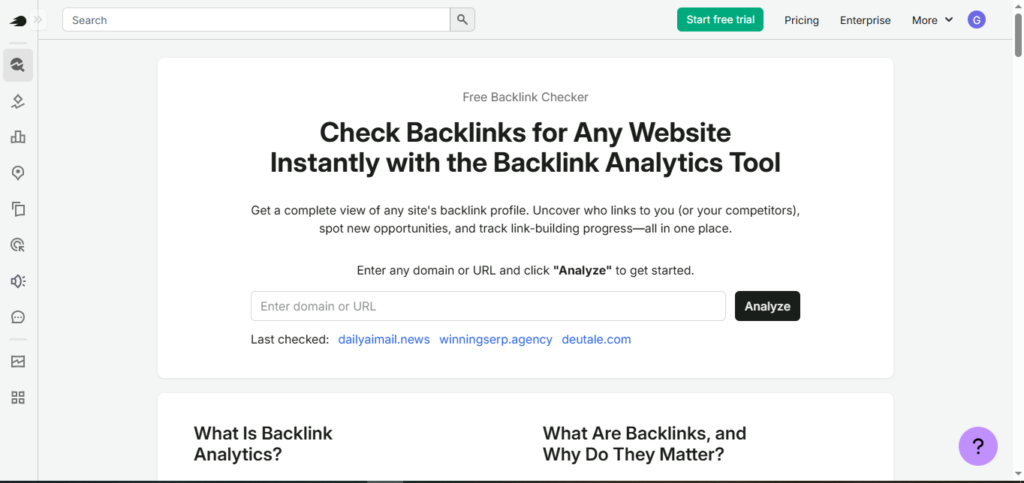
The Overview report displays key metrics, including total backlinks, referring domains, authority trends, and backlink growth.
Next, open the Backlinks and Referring Domains reports to review where your links come from and which websites contribute the most authority.
Use the New and Lost filters to track recently gained and removed backlinks.
Review the Authority Score of referring domains and investigate suspicious or low-quality links.
If you use Semrush’s Backlink Audit tool, check the Toxic Score to identify backlinks that deserve closer inspection.
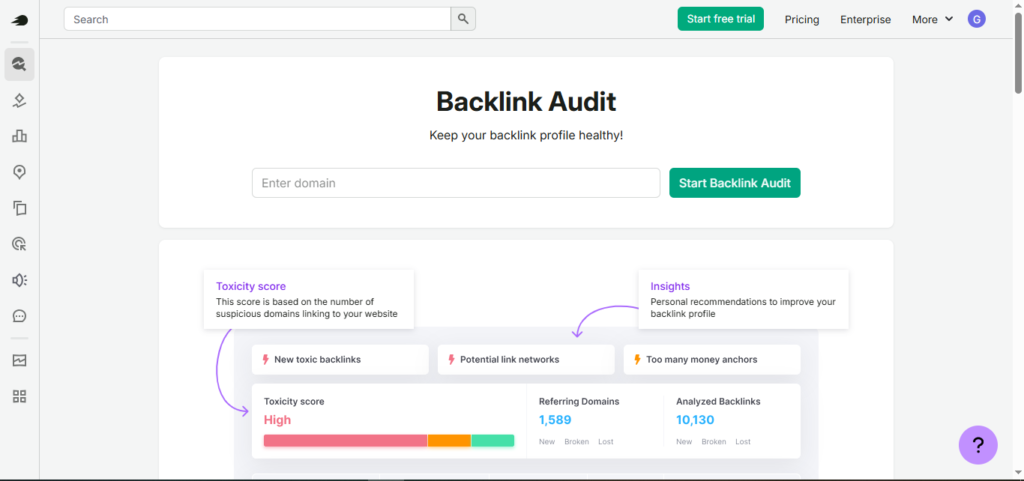
Monitor your backlink profile regularly instead of waiting for ranking changes.
Consistent reviews help you protect valuable backlinks, discover new opportunities, and maintain a healthy, natural link profile over time.
Frequently Asked Questions
1 – Do nofollow links still help SEO?
Yes. Nofollow links do not pass the same ranking signals as standard follow links, but they still provide value. They drive referral traffic, increase brand visibility, and can lead to natural editorial backlinks from people who discover your content through those mentions.
2 – How many backlinks do I need to rank?
There is no fixed number. Ranking depends on backlink quality, topical relevance, competition, and content quality. A few authoritative, relevant backlinks often outperform hundreds of low-quality links from unrelated or spammy websites competing for the same keywords.
3 – How long does it take for a new backlink to affect rankings?
Most backlinks influence rankings over several weeks or months. Search engines first need to discover the link, crawl the referring page, and evaluate its quality before incorporating those signals into search rankings and overall authority.
4 – Is buying backlinks ever safe?
No. Buying backlinks to manipulate search rankings violates search engine guidelines and increases the risk of penalties or ignored links. Invest in linkable content, digital PR, guest posting, and ethical outreach to build sustainable backlinks that support long-term SEO growth.
This Page Updated On :